Lee Wochner: Writer. Director. Writing instructor. Thinker about things.


Blog

Paws for concern

August 31st, 2026

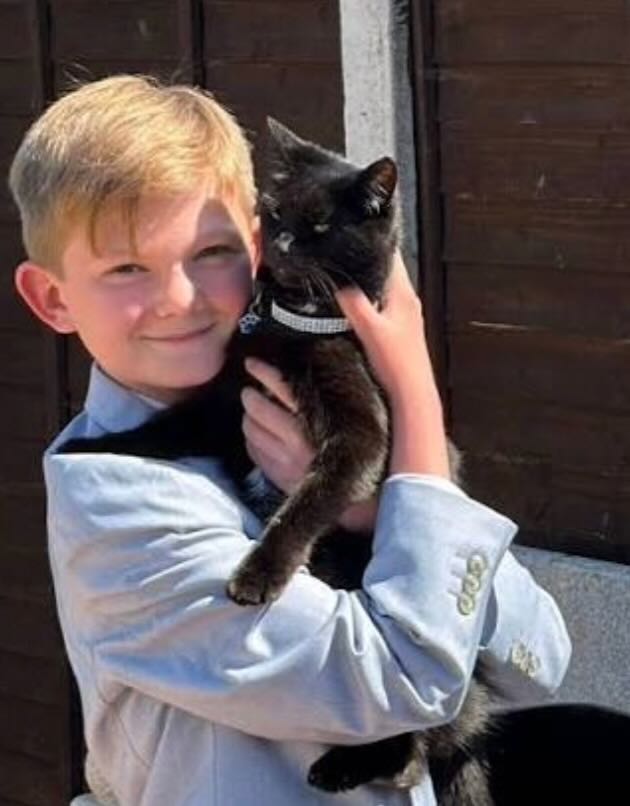
Thor, upon getting the news

Like so many others in our country, this American is about to lose his health care.

I speak, of course, of my team member Thor.

Thor has been with us about 10 years. His references were strong, he was quite eager for the position, and his initial interview with our team member Xena went well. Xena has done an excellent job heading up security; we’ve had absolutely no break-ins while she’s been on duty, and no one has entered our location or even come close without her sounding the alarm. Still, we thought she’d perform better with a junior member of the team, one she could mentor and, frankly, lord over — clearly a psychological imperative with her; as is done with many an office bully, we work around her. Sure enough, their partnership has thrived as they’ve divvied up duties well, with Xena warding off strangers in the manner of a warrior princess and Thor, despite being for some reason named after the god of Thunder, serving as a friendly ambassador who sits in on all meetings and smooths the way.

But: Imagine my surprise today when I was informed that our benefits provider is, essentially, kicking Thor off the health insurance policy. They’ve made an adjustment now that he’s over 70 (13 in dog years) and are offering $5,000 in annual coverage, with a $500 deductible, for a robust demand of a $365/month premium. It’s blatant age discrimination, and I’m shocked that it’s legal.

Now, anyone doing the math can see quite readily that we would be spending $4380 a year, plus not recouping the $500 deductible, for a total cost of $4880 — for a potential net benefit of just $120. Sometimes one has to make hard decisions, but this was not one of those times. Only a fool would agree to this (which makes me think that a certain stripe of voter will indeed be signing up for it).

Thor’s health insurance runs out effective end of September. We’re all just glad that he recently completed the extensive dental work he needed (cost: about $1600 had it been without insurance). Although, before he grew accustomed to his new dentition, it was strange to see him with his tongue hanging out — but we don’t judge. We respect everyone.

Will Thor be on his own, now that he joins the ranks of the uninsured? Because an Australian Shepherd who was with us previously once rang up about $1200 in emergency suturing years ago after a nasty run-in with a Rottweiler, I know Thor would never be able to simply turn up at an emergency room without paying his bill. 

I’m soft-hearted. I wish the best for everyone, and I believe that everyone deserves health care. And the particulars in this case pull at me. Here we have someone who’s been on the job for almost his entire life, with nary a complaint, and never a day off. We will see him through right to the end, no matter what any damn insurance company chooses to say about it.

I just hope that his eventual medical bills don’t spell the end of us.

Customer service

August 17th, 2026

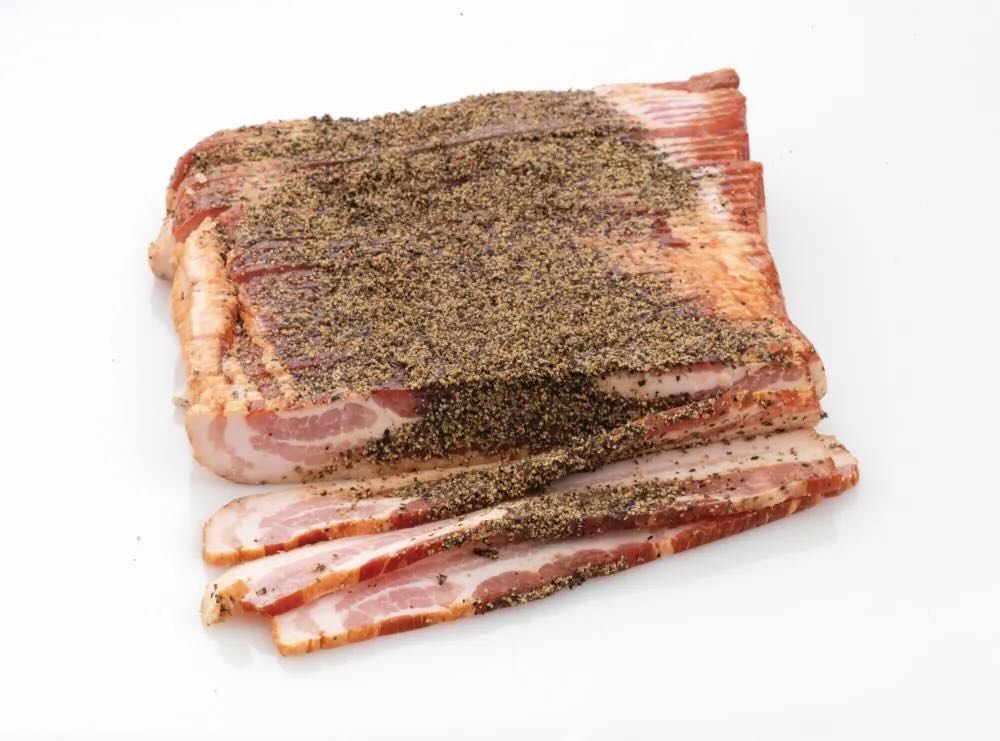
On Sunday, I stopped at the deli counter of my supermarket and asked for two pounds of the blackened peppercorn bacon.

I like this bacon because of the coarse ground pepper and the hickory seasoning.

The guy weighed out a pound and a third, and then there wasn’t any more in the case. But he offered to go inside to the back of the store and get some, then headed inside.

An attractive blonde walked up to the counter and after a bit, said to me, “Is anyone helping you?”

“Yes,” I said, “the guy went into the back to get something for me.” Then after a pause, I added, “But it’s nice of you to look out for my wellbeing.”

She laughed, then said, “You’re cute.”

I said, “My wife thinks so too.”

She said, “You are, with that personality.”

I added, “But other times, she just finds me annoying.”

My secret identity

July 25th, 2026

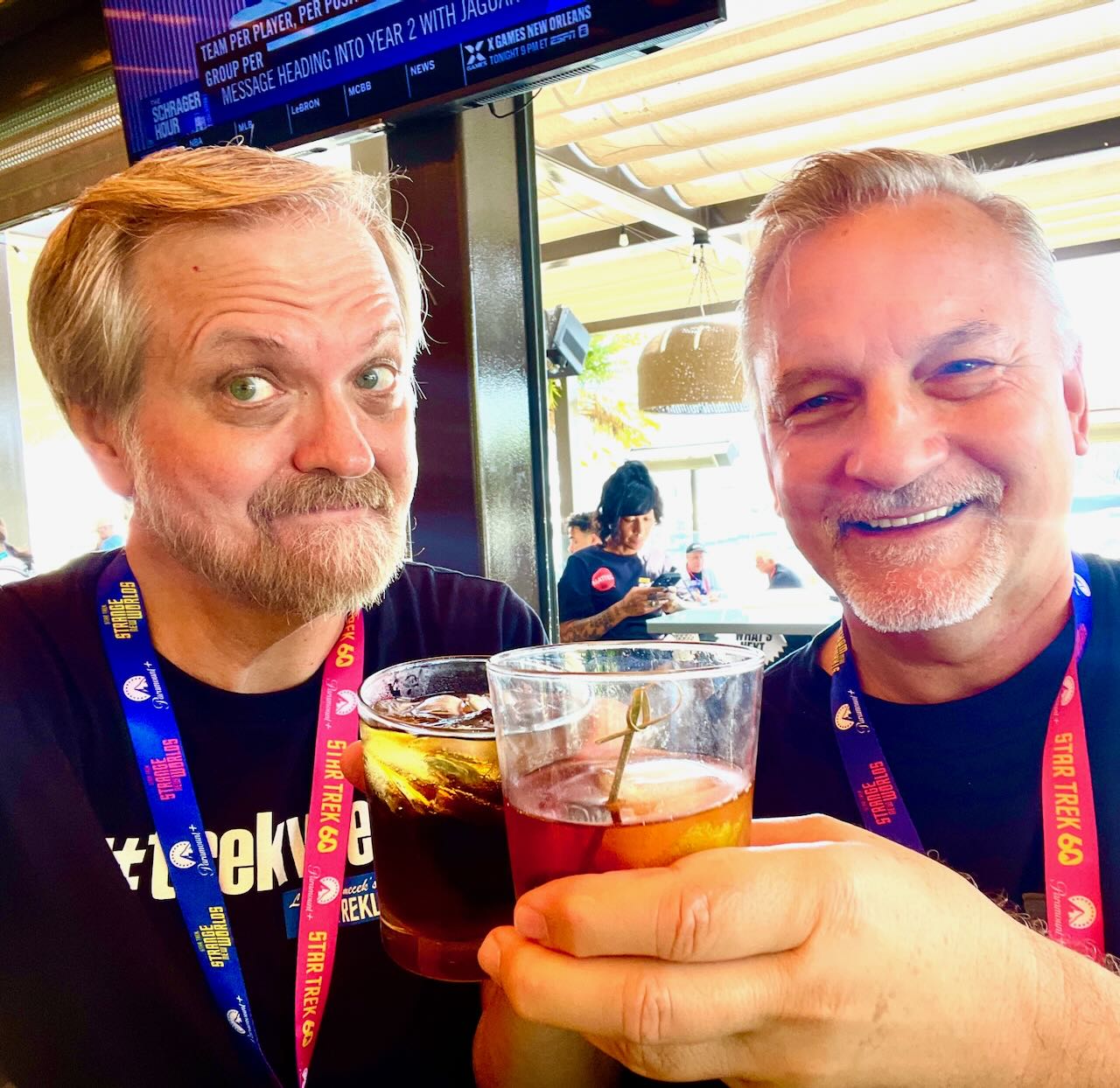
Good friend Larry Nemecek and me celebrating Comic-Con 2026.

When I was 11 years old, my mother insisted to my father that we needed to move. They sold our house in Devonshire, NJ, along with the house he’d built next door for his mother, and we moved 12 miles away, to Galloway, NJ, then known as Absecon Highlands.

All so that I might have some friends.

Where we’d been, there wasn’t anyone for me to play with. We weren’t close to school (so my grandmother drove me there every day), and no other kids lived around us. In front of our house was a strip of highway, while in back of us were acres and acres of thick woods split briefly by mostly unused railroad tracks. Occasionally, my dad would get together with his best friend Gus, and I’d see Gus’s son Glenn, but Glenn was a few years older and not really a friend.

My true friends were comic books. 

I had inherited a few from my eldest brother (much older than me, and long out of the house), and any chance I got, I’d add more. I lived, breathed, ate, and dreamed comic books.

After we moved, I made friends with the boy across the street, the boy at the end of the street, the boy in the house to the left, and even, occasionally, some kids at school — a school I could walk to. (And I started to realize that actual real-life friendship didn’t quite work the way it did in Marvel comics, where the Thing and the Human Torch were constantly squabbling, and where Spider-Man was a wise-cracking jackass. If you know me in person, you know this is a lesson I still haven’t fully absorbed. Unfortunately.)

Once I had friends, I realized how important friendship is to me. Because now I knew what it meant:  A friend was someone you could do things with together. You could race your dirtbikes out in the woods with friends. You could build a treehouse together. You could go see a movie together. You could dig underground tunnels with a friend. (It collapsed on a third friend. The other two of us frantically dug him out.) You could go camping with friends. You could, on occasion, get into a fistfight with a friend. After a few years, you could talk about girls with your friends. At some point, older friends could sneak you into bars before you’d reached drinking age. The options were endless.

Every year since 1988, I’ve attended San Diego Comic-Con, and from the start, I’ve been doing it with friends. That first year there were two of us. Some years, we’ve had as many as eight of us joining up to attend together, and sometimes I’ve brought my children, when they were actual children, or teens, or even into adulthood. But recently I’ve wondered if maybe this year or that year wouldn’t be my last year. Thirty-eight years is a long time to be doing something; was it time to let it go? I still read comic books, but most of the creators I’d care to see, meet, or listen to have died off, and attending this thing is expensive and quite an effort. Whenever you plop down 150,000-plus people in one constrained area, it’s got to be a bit trying.  To say little of the expense:  easily $1,000 (that’s the hotel room alone). Plus $80 just to park (!), plus the meals, the drinks, and whatever I might buy.

But last night, in our room with two good friends of decades (I’ve known Travis for 30 years, and Larry for 20) who’ve also been coming to this event off and on for decades, as we talked and laughed and joked until two in the morning, and shared how the original “Star Trek” so thoroughly programmed us into believing in the future and shuddering at the recognition of just how far away from the reality of a peace-building, cooperative Federation we are right now, I recalled just why this event is so important to me.

It’s about comic books AND friends.

Worth defending

July 4th, 2026

I was proud of my son when he joined the U.S. Army.

But because his enrollment happened to be during the first presidential term of a man completely unaligned with the actual principles of the nation, I felt compelled to say this to him: “The ideals of the nation are worth defending.”

Those ideals include Liberty, Equality, Democracy, and the Rule of Law.

Which the man currently in the White House has absolutely nothing to do with.

Which means that now, more than ever, on its 250th birthday, the nation needs the support of those of us who realize that.

Do what you can. Don’t give up. There are lots of resources and actions available with a little internet searching.

And don’t despair. Celebrate. Especially today.

As the writer Aurin Squire posted earlier today on Facebook:

“Shocked at all these international World Cup fans making videos about America…and loving it. It’s not everyone, but it’s 90% raves. Ranch dressing, Buc-ee’s, Texas BBQ, and overall hospitality. Apparently, a lot of them think Americans are, on the whole, more optimistic, more friendly, more encouraging, more likely to hustle.

“There’s a saying: if you want to hate America, stay online. If you want to love America, drive across a few states. And I’ve done that a few times…

“I guess these FIFA fans are reminding me of my cross-country road trips and all my small-town excursions over the years. And making me feel proud. Yes, yes, I can go into all my issues with this country. But sometimes it’s good to acknowledge privilege and be grateful. Grateful for what the ancestors built and the threads that keep this weird, wild, enormous thing called the USA together.”

Celebrate the successes — we’ve had many. Celebrate the ideals. Celebrate the opportunity that is America — including, now, the opportunity to once again change it for the better.

Meetings with Mel

June 30th, 2026

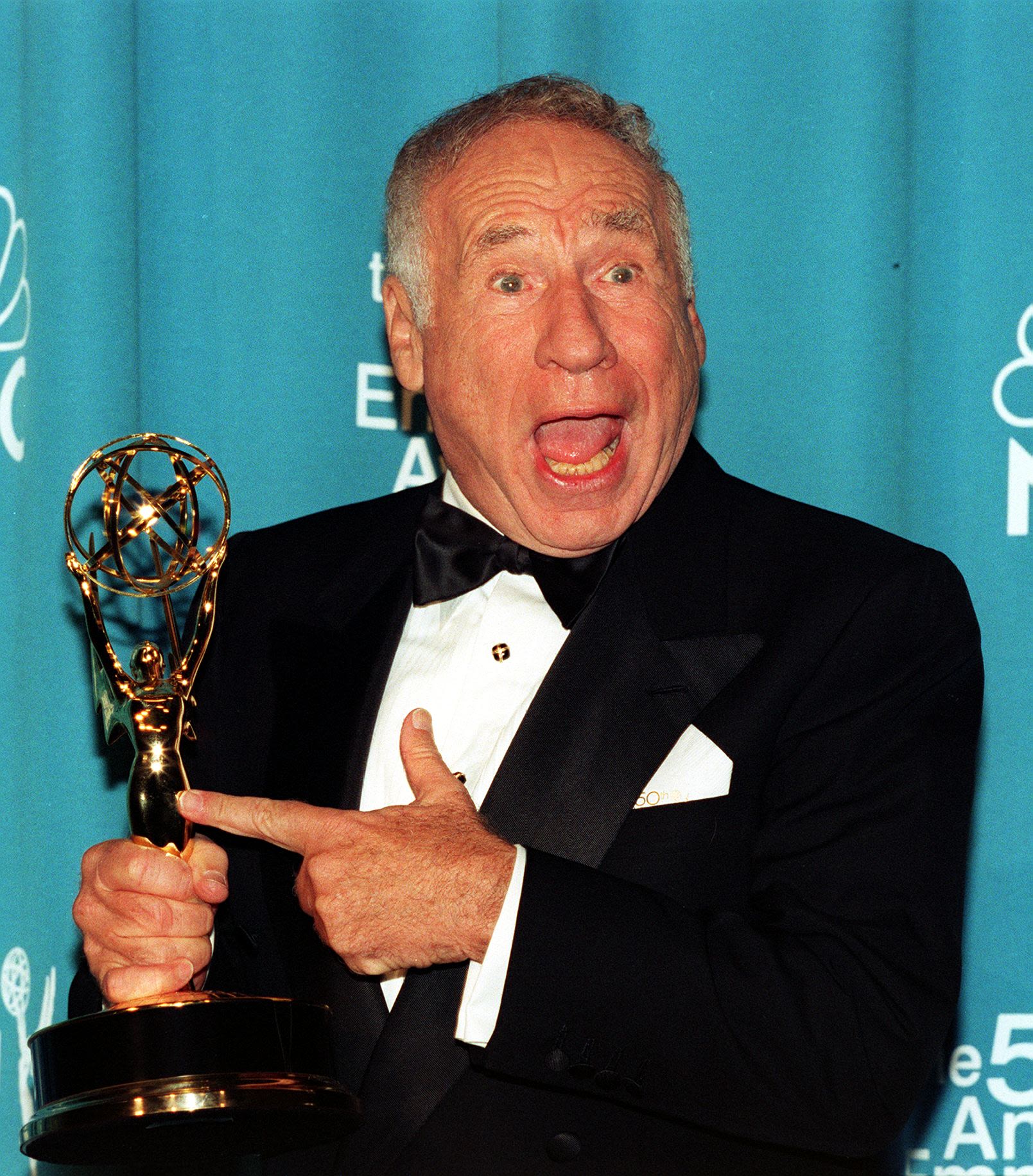
The first time I met Mel Brooks was in October of 1995, at Buster Keaton’s 100th birthday party. Buster, being dead, was not there.

At the time, I was producing a play by a writer named Kevin Barry, of Yellow Springs, Ohio. Kevin was in town, and one evening after rehearsal I invited him to join me for Buster’s birthday celebration, set for the now-shuttered Silent Movie Theatre in Hollywood. Kevin, like me, was a big fan of Buster Keaton, so he eagerly joined.

When we got there and bought our tickets and inched into our seats in the middle row, I found myself seated next to an attractive lady of a certain age with a towering faded red updo. I immediately recognized her as Eleanor Keaton, Buster’s widow, who had been a dancer and then Buster’s onstage costar when he returned to doing live performances late in his career. She was happy to be recognized, and happy to share the odd tidbit now and then as a few of Buster’s movies were screened, asides like, “Oh, we did that bit in Paris. The French loved it.” Kevin, meanwhile, was agog that I was seated next to Eleanor Keaton and that she and I were conversing.

After the screening, and after the sold-out audience ate Buster’s birthday cake, Kevin and I were standing outside when someone started talking about Buster’s career. I heard something not quite right, so in a friendly manner, I contributed some information that started with “Actually….”

And that was the first time I met Mel Brooks. The person he was slightly miseducating was his wife — Anne Bancroft. I had been watching Buster Keaton’s work all my life, since my father introduced me to his movies when I was about 6, and had been coming to every Buster screening for a few years at Silent Movie, and had read every available Buster biography there was. Not quite an authority, but certainly an ardent fan. Listening to me for a minute, Mel called out to someone else, “Hey, come listen to this — this guy knows a lot.” And that’s how Dom DeLuise joined the conversation. It was extremely meta to be discussing silent movies in front of the Silent Movie with three of the stars of the film “Silent Movie.” Mel Brooks was gracious, warm, and eager to know more — three traits that seem to come up every time he’s mentioned.

When we got in my car, my playwright from Ohio was thunderstruck, and I gathered from him that he thought this was just another night for my life in Los Angeles. As if.

The next time I met Mel Brooks was in 2003, when the stage version of “The Producers” was set to open in Los Angeles. At the time, I was CEO of the performing arts league, and I had assigned myself the task of writing the story about the show for our magazine. I got to the press junket and spoke to the co-writer of the book, Tom Meehan; and the director and choreographer Susan Stroman; and co-stars Jason Alexander and Martin Short (Jason Alexander was very deeply discoursing on his Acting Method, having confused the situation with performing Brecht, while Martin Short, as a tonic, was loose and funny and knew none of this was that important); and… I kind of ran out of time to speak with Mel Brooks. I’d said hello earlier, but there were still a clutch of people to see him, and I figured I’d gotten enough for my story. So I left.

The next day, I was at my office and on the phone with my friend Doug talking about who-knows-what, when my assistant buzzed in and said, “Mel Brooks is on line 2 for you.”

Which gave me the opportunity to say to Doug, “Gotta go. Mel Brooks is on the other line.”

I still cherish that.

Here was Mel’s opening line on the phone to me:  “How did I miss you?”

Perhaps the funniest person of the past 100 years, as acclaimed recently by The Atlantic and AFI and just about everyone else presenting him with centenary accolades, and a movie star and producer and honestly legendary figure in practically all aspects of entertainment for almost all of those 100 years, was being apologetic. He figured it was his fault. 

I’ve seen him a few other times, too, although not recently (he being, well, 100 years old). I believe I saw him in 2007 at the memorial service for Bill Idelson, a sitcom writer and actor from “The Dick Van Dyke Show” (he played Rose Marie’s boyfriend Herman) who had doubled as one of my writing professors at USC; I definitely spoke with Carl Reiner there. (It being a small town, Bill’s wife Seemah was also a performer in a play I produced at Moving Arts.)  For a while there, Mel Brooks was someone I kept running into at events and performances and awards shows. Like Tom Hanks, who I saw so frequently at the Taper and the Geffen that his face showed him starting to think he knew me. 

Having met some celebrities in my 38 years here in Los Angeles, here’s what I want you to know about Mel Brooks. In a town where it’s almost required for celebrities to put on airs, to be aloof, to be indifferent while all-knowing, Mel Brooks has always seemed humble but driven, the funniest and cleverest guy at the party — while still an everyday guy (who just happened to marry a beautiful Oscar-winning movie star). 

Maybe his approachability was key to his success.

Why it’s great being a playwright

May 24th, 2026


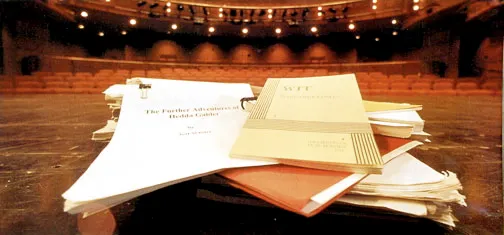
This spring and summer, I’ve carved out more time than I’ve had recently to work on my other job: being a playwright. This weekend is already serving as a wonderful reminder of why it’s great being a playwright. Oh, you’ll get lots of boo hoo hoos from playwrights (Tony Kushner once complained about how poorly playwrights are paid, even as he was loading a new $10,000 couch into his townhouse), but in many ways, it’s a dream job. Or avocation. Or hobby. Take your pick.


Based upon my experience of being a playwright, dating back a long, long time to my first play getting staged when I was 15 and in high school, here are just a handful of the reasons it’s great.

  • Nothing beats hearing people laugh at all of your jokes, in the right place and at the right time, without prompting by your friends or lovers. (In my experience, your family does no prompting. More likely they’ll sit there like Easter Island statues, afraid it’s about them.)
  • It can be nice to win an award now and then.
  • When you don’t, it’s also comforting to know that the judges were wrong.
  • Usually, when you fly in to see your play, everyone there will treat you the way you wish everyone everywhere treated you: with respect and reverence, and enormous admiration for your wit. It’s even better than how your dog does it.
  • Sometimes you get to be a visiting artist or teacher or judge or lecturer, usually in a bucolic location that couldn’t quite get Suzan Lori-Parks, but they’re happy to make do with you, and they buy you drinks.
  • Whether or not they see it, an actual production helps your family understand “what you’re trying to do.” Maybe.
  • You get to work with actors. Sure, some of them are as bad at it as you are (or, inconceivably, even worse), but most of the time you get mostly good people, and the surprisingly good people lift your material up to even greater heights, and you get credit. If you saw a play that really wasn’t much of anything, but you enjoyed the hell out of it — that’s what happened: the actors. And, seriously, there are terrific actors everywhere. I’ve had plays produced in a little town in the interior gold-rush area of California, and in the backwoods hilltops of Arkansas, and both times the locals were great. I salute them!
  • Also, the small-town people have a greater tolerance for outlandishness than you think. I think they even expect it, like: “Hey, this is an artist, so we shoulda figured on this.” So just have fun.
  • Every time you get a production, you’ve set up a little outpost somewhere on the globe. People there now know you, and you know them! (Remembering their names can be a separate matter.)
  • Those people in the outposts? Sometimes they’ll let you crash at their place. Even in pricey places like Manhattan. I’ll say no more.
  • You make lifelong friendships with some of the actors and directors and designers. (And lifelong enemies with some of the others.)
  • If it’s a production where you live, you’ll get to learn who your true friends are: They’re the ones who bought tickets.
  • In your mind, you’re communing with Shakespeare, Brecht, Stoppard, and whoever wrote “Bob’s Holiday Office Party.” What could they learn from you? (You’d love to share with Brecht your better ending for “The Good Person of Szechwan.”)
  • As a playwright, you will listen more closely to what other people say. Of course, you’ll need to determine for yourself whether or not this is a benefit.
  • After you have even a little playwriting income, it can be surprising what’s tax deductible. I’m pretty sure that cigars qualify as office supplies.
  • Big benefit: You can swear off drugs. That audience response is your drug.

This is just the starter list. There are many more delights (such as an entree to meeting famous people you’d like to meet), so I could go on. But I think now I’m going to go on to working on my new play, so that maybe I can add more of them in the coming months and years.

Mom

May 10th, 2026

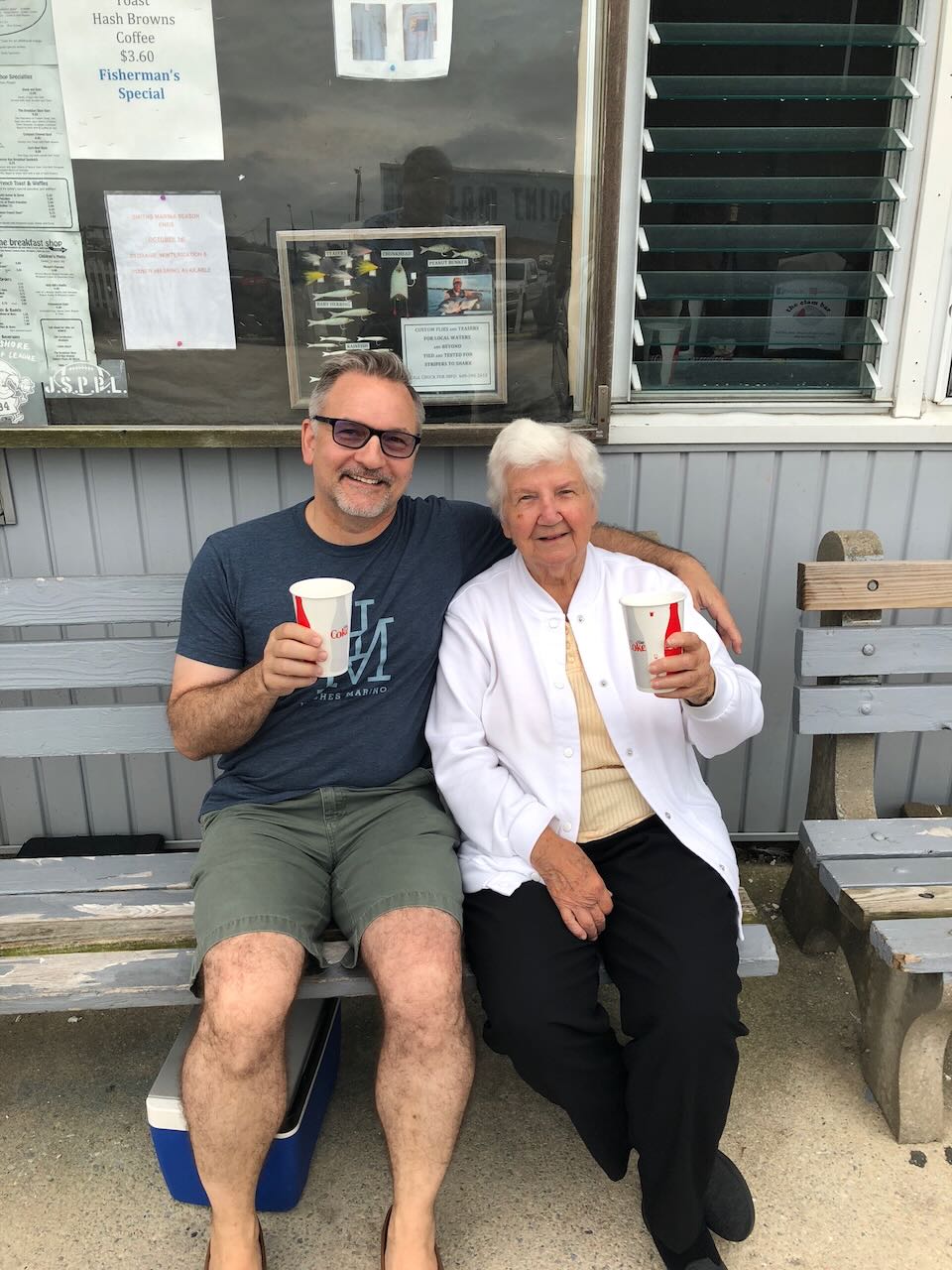
It’s not soda in those cups.

That’s beer that my mother and I are drinking, five or six years ago, she then in her early 90s, while we were awaiting a table at the Clam Bar in Somers Point, NJ.

Mom left this mortal coil two-and-a-half years ago, and I sure miss her. She was tough but fair, an even-tempered German Lutheran woman with a good heart and a strong will and both a ready laugh and at times a bit of an edge.

She would feed anyone and everyone who came over. Feeding people was first nature to Mom. Her first question, always, to everyone, was, “Didja eat yet?” Because she would always feed you. As a child of both the Great Depression in her native Johnstown, Pennsylvania and that city’s Great Flood, both being times when not everyone had enough to eat, she learned early on that you shared. No matter who you were or where you came from, my mother would feed you. Over the years I brought many, many people over, most of them strange artistic types or fans of the outre or quasi-bohemians or just college misfits; she fed them all. She fed my father, we children, her grandchildren, all of our friends, neighbors who dropped by, anyone and everyone. Generally, she kept a tub of fried chicken wings in her refrigerator (these, she said, were “fer snackin’ “) but even if it looked like she had nothing to offer, she somehow whipped up something incredible out of thin air.

Like all good mothers, she knew the difference between real problems and whatever minor annoyances you, as a child, might be complaining about. Complaining and crying were actively discouraged; the lesson was that if you’ve got a problem, you should just deal with it. If you were a child and you fell down and hurt yourself, she offered a mild, “Let’s take a look at you. … Oh, you’re fine.” If you wanted to cry about it, you had to go cry on the steps — and the steps were outside. Where nobody, including her, would have to hear it.

She was a font of hard-earned clear-cut wisdom. When, at age 16, I had been out drinking with some young men several years older than I was, and had had far too much and had been vomiting all around the parking lots of the bars along Margate, New Jersey, one of the guys finally thought he should call my house to see what they should do. My mother answered, and when my friend Kevin told her that Lee had had a bit too much to drink, my mother’s answer was, “You took him out, you keep him.” Kevin wound up with me vomiting in his basement until I sobered up. Lesson learned for both of us.

When I was an oddball teen, reading things I shouldn’t have been reading and writing things just as outrageous and publishing little magazines far above the level of my maturity, and causing all sorts of trouble at school and going to big cities on my own, she had the foresight to just let me be, even when she found what might have looked like very rude cartoons in a zine I was publishing. Some parents would have swooped in, but hovering around wasn’t her style, and I remain grateful. I just wanted out of the constrained life of southern New Jersey and eccentric art seemed like a pathway and certainly an interest, and I guess she knew.

She also provided the very best advice ever given to me: “When you’re going out, always take a jacket, and always use the bathroom, because you never know.” To this day, I follow this, and I’m always glad.

I count myself very lucky to have had her as a mother; if you’re reading this, I hope you were half as lucky. She had a good heart, a strong sense of caring and service, and unmatched personal strength. The only reason she’s no longer with us is because she let go. Most people fear death; she decided it was her time and went toward it in her sleep, still physically well at age 98.

She may be gone, but the example she set lives on in her children and her grandchildren and their children. We’re all the better for it.

A visitation

April 4th, 2026

I was struck by how well David Thomas was looking:  fit, lively, energetic. The last time I’d seen him he’d been ill, visibly ill, and weakened — but still determined, as ever, to continue on his life’s work, producing remarkably fresh and unexpected music that undermined the expected norms of a rock concert while delivering something powerful and urgent. He had been so debilitated that I couldn’t quite square how healthy he looked, sitting in a deep leather chair and enjoying a dark pint, but I was sure glad to see it.

The venue was a small pub in England, warm and friendly, but featuring a genuine performance space with lights and sounds. Waiting for the band to go on, I ordered a refill and when for some reason the barkeep didn’t fill my pint glass all the way, I gently complained and he topped it off. So I bought another one, for the man next to me, and we fell into conversation, he about how thrilled he was to be here, me about how proud I was to be producing the event.

David went onstage first, which was a massive surprise — I’ve seen Pere Ubu innumerable times, and generally the band came on first, he was generally the last one on stage, and deservedly so, as the front man, as the originator, the visionary. But then it became clear that it would be only David, David and no one else, and I worried if people would feel disappointed, and if they’d want something back, something in return, a make-good, because they’d expected Pere Ubu, I think I had advertised it as being Pere Ubu, but it was just David Thomas. But David, being David, went full thrust on his solo performance, and he was offbeat and brilliant and utterly committed and captivating.

And then I realized:  David is dead. He looks so good! And I’m so glad to see him! But I remember he’s dead.

And Pere Ubu — or, in his absence, the band as it was called two weeks ago in Hove and in London, “The Moon Unit” — isn’t dead. Because I just saw it without him.

And then I felt a hand rubbing my back, that of my fiancée, and I realized I was dreaming, awakening from a dream now, and I was very sad indeed to realize it was a dream, because I so wanted David Thomas to be alive. David Thomas whom I knew and had spent time with on several occasions over the course of 25 years and someone whom I always appreciated, not a friend, not really, but certainly a creative lodestar, someone whose work I had followed for the vast majority of my life, and I didn’t want him gone because I didn’t want the concerts to stop let alone the new music, and also because I wished him well, truly, always, as a thank-you for everything he’s given me for 40 years and more, and because, selfishly, selfishly because I could see the health struggles he’d been suffering, selfishly I just wished him to be alive longer.

But the dream was over, and no, I wasn’t producing a gig by Pere Ubu or by David Thomas, and David was still dead, gone from his mortal plane, and I was still grateful to him but still feeling the hollow space in my core that I’d felt since he died last April 23, a date that I’m unable to forget.

I shared this with K., my dream, and I suppose she could see written on my face what it had meant to me, no matter what I said about it. Science will tell you that when you dream of someone you’ve lost, it’s your brain processing your loss.

But what K. said to me was better: “It’s nice that he came to visit you.”

You like theatre… why???

March 29th, 2026

I’m overdue to see a good play.

I say this having seen the new show at the National Theatre in London two weeks ago. Beautifully staged and acted and lit… and pointless. It was the sort of play that, with no conflict and no real story, just the trappings of story, lives or dies on each little moment. The funny moments got laughs, at least in Act One. But by Act Two, everyone was tired of it, and I was calculating in my head how much the Uber back to my pub guesthouse would cost. (I came damn close.) The highlight of the evening? Sharing complaints with the woman to my right about how disappointing the play was, she especially, having taken the train in from Essex to see it.

I also say this having seen the two-act one-person show written by and starring a somewhat-acclaimed, or at least noted, or perhaps notorious, playwright whose previous work was far more fun. I genuinely don’t like tearing down others’ work — honest — but in my weekly playwriting workshop we discuss the plays we’ve seen recently, and to my good fortune two others in the group had also seen it and had a lot to say, none of it positive. Except: In fairness, I was impressed with the set change. Seriously.

I say this too having seen earlier in the month a revival of a play by a noted playwright, a writer of at least two plays I revere, that was so poor it called into question everything else this writer had written. Was it just this production, or was his work always his ham-fisted? (I think the former.)

Years ago, my then-wife stopped going to the theatre with me. “It’s always bad,” she said, “and you always say it’s bad.” Not true. And, the final two shows I dragged her to before our split were both terrific and we both had a great time.

No, I don’t think the theatre is always bad.

But I do think it’s frequently bad. After all, it’s hard to do, getting a good play, casting it well, providing the right circumstances for it (the space, the designers and design, having not just a good director but the right director, and so much more) and then… having the right audience for it. And having the elements support it (no rain/snow/terrorist attack).

Early on in dating the woman I’m going to marry in August, a friend suggested that he and his wife double-date with me and my then-girlfriend by seeing a play in Santa Monica starring two ex-TV stars in a play by a well-known playwright. My friend had seen this play before and assured me it’d be great.

It wasn’t.

The two ex-TV stars (the lead from “Northern Exposure” with one of the “Desperate Housewives”) were terrific. If you look down on TV actors, you should know that most of them are incredibly talented, whether or not the material that they’re now known for is any good. Both of these two had a background in theatre, knew what they were doing, and showed it on stage.

But:  The play was dull. It was badly directed. (Leaving me, for one, unsure whether it was supposed to be funny or not. Three young women in the audience clearly had decided it was a comedy and kept goosing it along – tittering here and there and trying to provoke others to laugh, to no avail.) It was slow. And it was badly costumed. When you’re doing a show about a man repeatedly referred to as a clotheshorse, perhaps you should get him a well-cut suit or ask him to provide his own, and for sure don’t outfit him with heavy shoes that he must clop around in, scattering thunderous echoes throughout the space.

The worst part, by far:  Shortly after this expensive little disaster, K. and I got into my car to drive back to her place. She turned to me and said, “You like theatre… why???”

If you have to explain why you like one of the foremost animating passions of your life to your new love, if it’s in no way apparent to her, it’s disappointing to say the least.

But here’s what I told her:

It’s hard to do. SO, when it’s done well, it’s a miracle — and you were there for it. You were there for the miracle. And it feels truly miraculous. You and that audience you shared it with, you all have that frisson, that electrical current through your body, that makes you feel alive. Comedy, drama, it doesn’t matter, you just feel charged when it reaches down your throat and pulls all the related emotions right up and out of you.

And:  A few months ago, I bought tickets to see a show downtown, and I didn’t even tell her. I just told her we were going downtown. We settled in for the show, and as it took off, as it gripped all of us, she started borrowing my glasses so she could see better. At times I heard her suck in her breath or gasp in shock at what was happening. During intermission, she said, “Come on, hurry! I want to go get my glasses out of the car!” We ran down the many levels to where my car was parked and made it back just in time with her eyeglasses clenched in her hand, and Act Two was even more shocking, even better. And then she said:

“How did they do that?!?!?”

And then:

“Is this why you love the theatre?”

But what if you don’t want to…

March 24th, 2026

Exercise with mice? I know I don’t.